
Post-Holiday Marketing: 5 After-Christmas Campaigns With Ad Examples
On December 24, a coffee shop can sell a pour-over kit with “Pick it up before Christmas.” On December 26, that same kit needs a new reason to buy. Try “Make your first cup at home,” then send the shopper to a page that shows what’s in the kit, what it costs and how soon it can ship.
Post-holiday marketing is the handoff from gift shopping to what customers want after Christmas. Start with one offer you can fulfill, one audience you can reach and one page that delivers what the ad promises. The five campaigns below come with copy, landing-page ideas and a way to tell whether each one worked.

What is Q5 marketing?
Q5 marketing means adapting your campaigns for the shopping period just after Christmas. The dates vary. This guide uses December 26, 2026 through January 7, 2027 for the first wave.
A shopper who bought a gift may now want something for their own kitchen. Someone who received a gift card wants to see what it buys. A customer with the wrong size needs an exchange link. Those are three different trips through your store, even when they start on the same day.
In a Google-commissioned Ipsos study, 57% of the 1,078 U.S. shoppers surveyed in its post-holiday window were focused on shopping for themselves. The survey covered adults who had done holiday shopping activities in the previous two days, and the post-holiday sample covered December 26, 2025 through January 7, 2026. Google and Ipsos post-holiday shopping research.
Five after-Christmas marketing ideas with sample copy
These five offers use a fictional online coffee shop. The prices and products are illustrative. Start with the customer action you can support today and use the matching campaign.
1. Turn a gift bestseller into a purchase for yourself
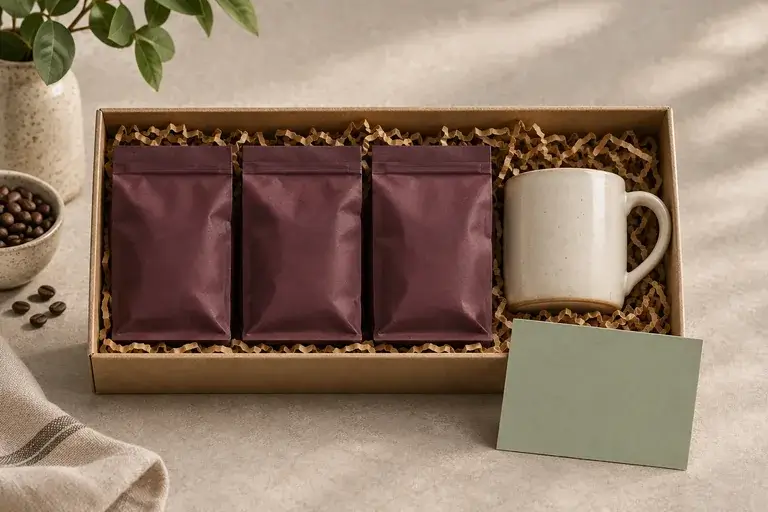
Audience. Shoppers who browsed the gift collection and left without buying. Try a bestseller with a clear everyday use. For a $39 pour-over kit, show what the shopper can do with it on their first morning.
Banner headline. Make your first cup at home
Supporting copy. Pour-over starter kit · $39
CTA. See what’s inside
Destination and metric. Link to the kit page with a photo of every piece, a short brewing demo and a delivery estimate. Track new-customer orders and acquisition cost for this audience.
2. Sell the accessory the gift left out
Audience. December buyers of a specific brewer, including first-time customers. Use their order to suggest a compatible item. For gift purchasers, make the brew guide easy to forward to the person who received the kit.

Card headline. Filters that fit your new brewer
Supporting copy. 40 paper filters for your pour-over dripper.
CTA. Shop matching filters
Destination and metric. Link to the filter pack with the compatible model listed next to the price. Send the offer after expected delivery and exclude buyers whose original order already included the same pack. Measure second purchases from the December first-order group.
3. Show what a gift card can buy
Audience. Gift-card recipients who arrive at your storefront or opt into marketing. Use a homepage tile or a link from the balance page when you can’t identify recipients. Start with an amount that matches a denomination you actually sell.
Homepage headline. What $25 buys at our coffee shop
Supporting copy. Pick a $24 sampler, an $18 bag of beans or a $16 mug.
CTA. Browse picks under $25
Destination and metric. Put the balance link and redemption steps above the collection. Show shipping and taxes at checkout and explain how to pay any amount the card leaves uncovered. Track orders paid partly or fully with a gift card.
4. Clear seasonal inventory with a precise offer
Audience. Shoppers who viewed your winter merchandise. For an after-Christmas sale, mark down a defined group of products with enough stock to advertise. For this coffee shop, that’s the mugs with snowflake patterns.

Banner headline. Winter mugs now $12
Supporting copy. Select snowflake mugs · While supplies last
CTA. Shop winter mugs
Destination and metric. Link to the eligible mugs and show which colors are in stock. State any item-specific return terms before checkout. Pause the ads when inventory is too low to fulfill reliably. Track units sold and contribution after refunds and ad costs.
5. Give customers a January routine they can try tomorrow
Audience. New prospects and existing customers who want to try brewing at home. Sell one manageable action. For the coffee shop, it’s brewing one cup before work, using a short recipe and a bag ground for a pour-over.
Social headline. Your first weekday pour-over
Supporting copy. Watch the one-cup recipe, then choose beans ground for your brewer.
CTA. See the recipe
Destination and metric. Put the recipe, grind options and links to the featured beans on the same page. Track orders from recipe visitors alongside the first-order cost. For the rest of the month, use the four-week January campaign plan.
After-Christmas examples from Target and REI
Target gives shoppers a way to use their gift cards
On December 26, 2025, Target published a post that grouped products by two things shoppers could do next. They could get ready for New Year’s Eve or pick up something for a January wellness routine. Its wellness promotion had its own January 4–10 dates.
Try it. Build a collection around one reason to shop, such as making coffee before work. Feature three products that fit common card amounts. Target’s December 26 campaign.
REI tells cardholders exactly where to use their card
REI’s help page gives separate redemption instructions for online, in-store and phone purchases. The online instructions explain which details the shopper needs at checkout.
Try it. Put a two-line redemption guide beside the gift card field and link to it from your gift card collection. REI’s gift card redemption instructions.
Before-and-after banners for the same coffee kit
Both mockups sell the $39 kit. The Christmas version answers “Can I still get a gift in time?” The after-Christmas version answers “What can I make with this?” Keep the price and product photo if they’re still accurate. Change the reason to buy, the CTA and the first screen of the destination.
Before the pickup cutoff
After Christmas
In AdflowKit, use the approved headline and CTA to build the second banner. Review the kit photo and price in the editor, then adapt the layout for your chosen Google Display placements or Meta placements. Check the smallest version at actual size. If only one line fits, give it to the message that explains the offer.
The December 25–26 campaign handoff
December 25 · Retire expired offers
Schedule gifting ads to stop at the actual order cutoff, even if that falls before Christmas Day. Check scheduled emails, shopping feeds, social posts and site banners. Remove expired codes, delivery promises and countdowns wherever the customer can see them.
December 26 · Verify the new offer on mobile
Open each ad’s destination on a phone. Match the price and CTA, try one eligible item in the cart, and check current delivery or pickup estimates. Put the exchange link near the returns policy so gift recipients can find it without going through the sale.
Give one person the launch check and another a way to pause the ads if they’re covering stock or support. For a store with more than one location, test one in-stock and one out-of-stock location before advertising pickup.
How to budget and measure Q5 campaigns
Pull December results by product, audience and offer. A bestseller may be worth carrying forward if it still has stock and enough margin to pay for the next sale. Pause ads tied to expired terms or low-stock products. Give a new message a small test budget based on what you can afford to spend per order.
Example. A $39 kit costs $16 for product and packaging, $5 for shipping you cover and $2 in payment fees. That leaves $16 before ads and returns. Set aside $3 per order for expected return costs and you have $13 for ads at break-even. At an $11 cost per order, $2 remains before fixed costs. Use your actual costs and reconcile the estimate once refunds come in.
- Compare December buyers as a cohort. Use the share of first-time December buyers who placed a second order within 30 days. Give each buyer the same follow-up window.
- Count gift-card orders and extra spend. Track orders using a card and how much shoppers paid beyond the redeemed balance. A card redemption and a new card sale are different events.
- Give returns time to show up. If you compare clearance orders with regular-price January sales, give both groups the same time to accumulate returns. Compare what remains after discounts, refunds, product costs, fulfillment, fees and ad spend. Check return reasons for fit, compatibility or missing product information.
- Test one change at a time. Compare two headlines for the same offer, audience and page. If volume allows, use a holdout to estimate whether a follow-up created additional orders. See the guide to testing ad creative.
Frequently asked questions
When should an after-Christmas campaign start?
December 26 is a practical start if the offer is ready and someone can check stock, checkout and customer support. Schedule old messages to stop at their real cutoff and verify the new page before sending traffic to it.
What can I promote after Christmas without a discount?
Try a compatible accessory, a gift-card shopping guide or a one-step routine. A coffee shop can send a brew recipe with a link to the matching filters and keep the regular price.
Should I keep my December retargeting ads running?
Keep reaching eligible shoppers where stock and margin support it. Replace expired creative and tailor the offer to what the shopper did in December. Someone who bought the kit can see matching filters. Someone who only browsed it can see what comes in the box.
Image and example credits
The AdflowKit editorial team wrote the fictional coffee-shop examples and designed the banner mockups. The cover and the three campaign images are AI-generated illustrations of fictional products. The Target and REI examples are editorial summaries of the linked public pages.