
10 Gym Ad Examples: Membership Offers, Copy & Banner Ideas
A useful gym ad makes the first visit easy to picture: what the person will do, what it costs and how to reserve a place. “Join now” asks for a decision before answering those questions.
Below are 10 original gym ad examples for first visits, personal training, group classes, returning members and January 2027 campaigns. Use the offer and copy as a starting point, then replace the details with terms your gym can actually deliver.
These are fictional concepts created by AdflowKit, not ads from real gyms or evidence of campaign performance. All prices and schedules are examples in US dollars. Check your costs, staffing and actual terms before adapting them.
Which gym advertising idea fits your next booking?
Start with the session you have room to deliver. If Tuesday evening is full but lunchtime has space, an all-purpose membership discount can bring the wrong demand. Promote the specific introduction or time slot your team can support.
| What they need to decide | Offer to consider | Where the click should go |
|---|---|---|
| Will I know what to do? | Coached introduction | Intro-session booking |
| Will I like the instructor? | Meet the trainer | Trainer and meeting times |
| Does it fit my week? | Named class and time | Relevant class calendar |
| Can I try it with a friend? | Two-person pass | Booking for both participants |
| Can I fit it into lunch? | 30-minute express class | Lunchtime calendar |
| Can I see the space first? | 15-minute tour | Available tour appointments |
| Can I return without a new plan? | Seven-day return pass | Eligibility and pass checkout |
| Can I train during the day? | Restricted-hours membership | Plan hours and billing terms |
| Can I try an open day? | Tour and class taster | Event date and arrival slots |
| What happens in January? | Defined intro pack | January start dates |
Choose a trial price that supports your staffing and session costs, then make sure there is space to deliver the offer.
10 gym ad examples with offers, copy and CTAs
Each example includes the intended audience, the offer, a headline, primary text and the booking-page detail that makes the promise concrete. The CTA phrases describe the intended action; choose the closest button available in your ad platform.
1. Gym intro offer ad: three coached sessions
Audience and goal: New visitors who want to understand the space before choosing a membership.
Example offer: Three coached introductory sessions for $29, used within 14 days.
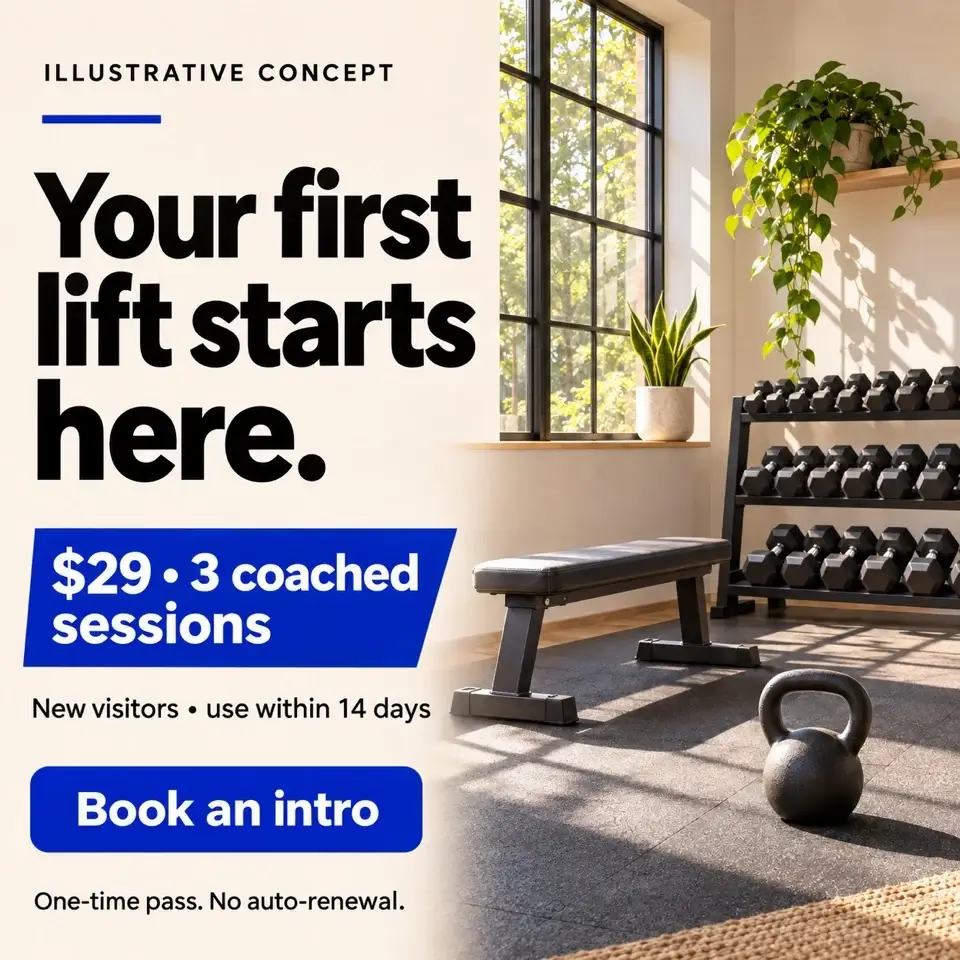
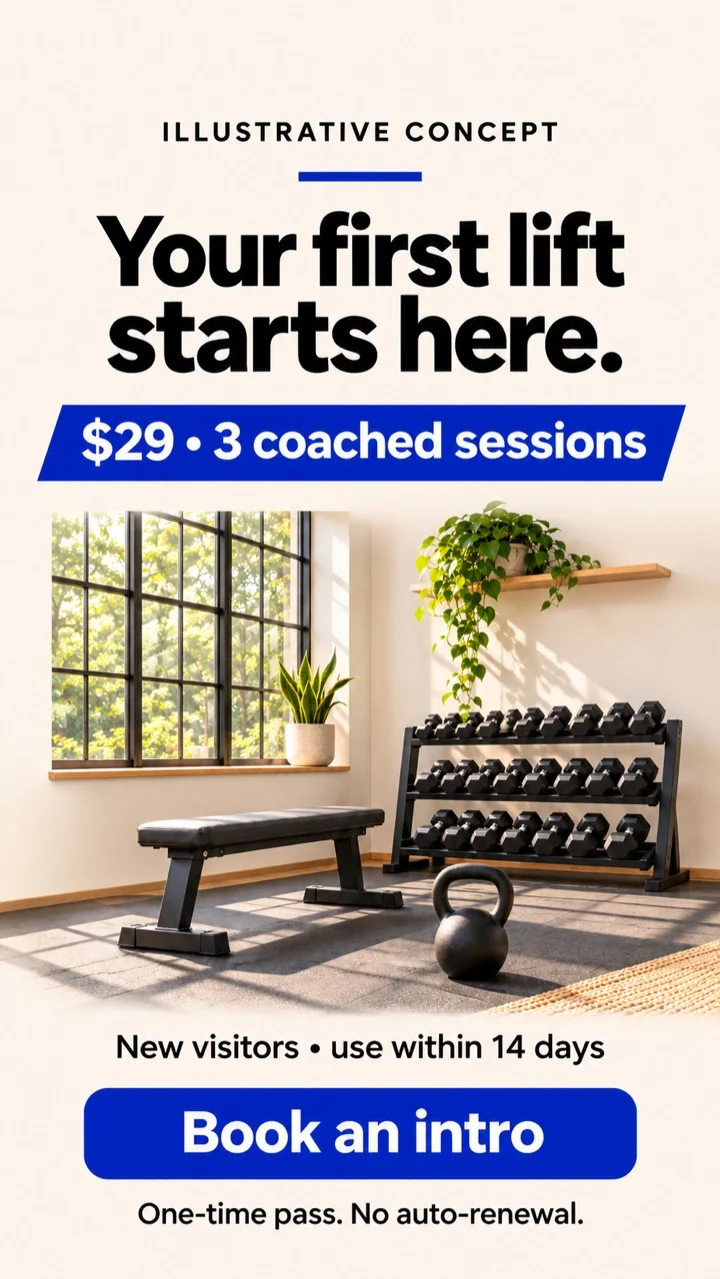
Headline: Your first lift starts here.
Primary text: Start with three coached sessions for $29. We’ll show you the equipment, explain the session and help you choose a starting point. New visitors only; use within 14 days. One-time pass. No auto-renewal.
CTA: Book an intro
Visual direction: A sunlit studio, a bench and neatly arranged weights. Leave space for the three-session offer.
Why this approach is worth trying: The offer answers “What happens when I arrive?” It sells a defined introduction, so the visitor can assess the gym before committing.
Booking-page match: Show session length, the location, available times and exactly what coaching includes. Do not send this click to a generic membership grid.
2. Personal trainer ad: a free introductory conversation
Audience and goal: Visitors comparing personal training options.
Example offer: A free 15-minute introductory conversation, with no workout or purchase required.
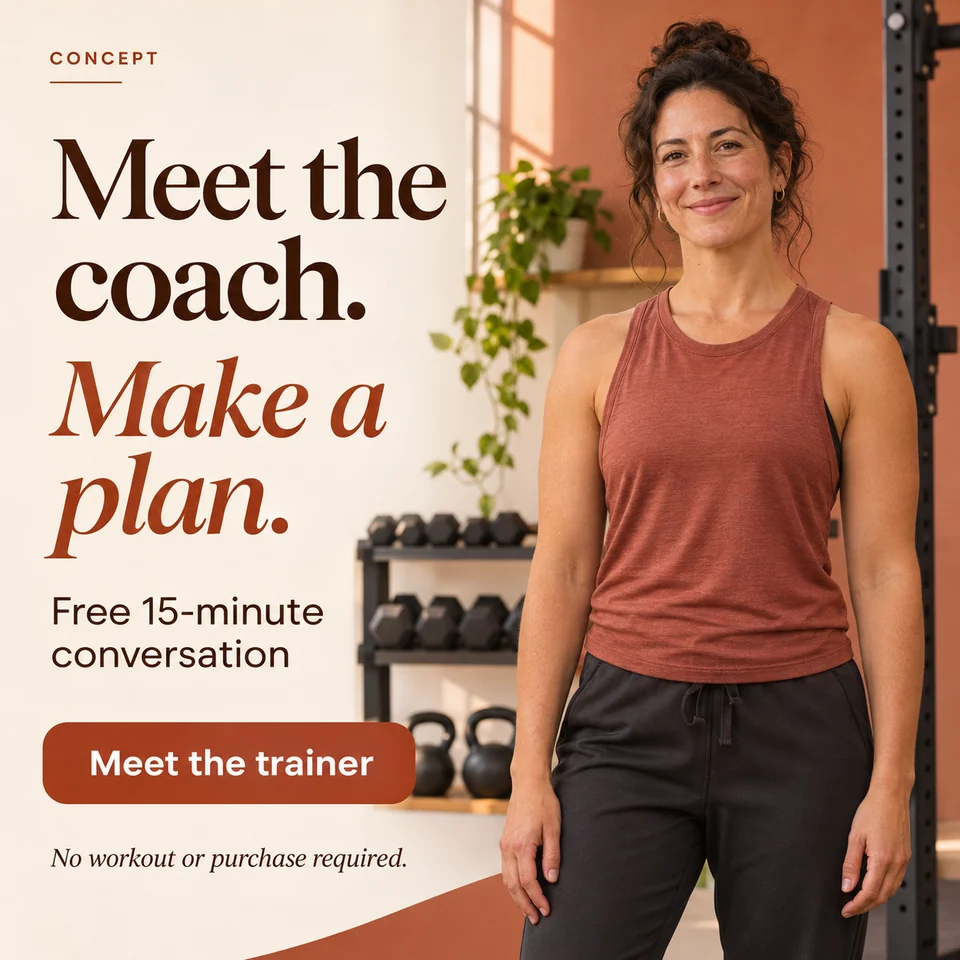
Headline: Meet the coach. Make a plan.
Primary text: Book a free 15-minute conversation about training options, scheduling and how coaching works. No workout or purchase required. Choose a time and meet the trainer at the studio.
CTA: Meet the trainer
Visual direction: A welcoming coach portrait with a short invitation and clear meeting length. For your campaign, use your actual trainer’s permission-cleared portrait, name and role.
Why this approach is worth trying: The next step is a conversation. Calling it a consultation should not quietly turn it into a paid assessment.
Booking-page match: Include the actual trainer’s bio, relevant qualifications, meeting format and duration. Publish only qualifications you can verify.
3. Group fitness class ad: a named time and price
Audience and goal: Local visitors deciding whether a class fits their week.
Example offer: One 45-minute Tuesday class at 6:30 p.m. for $12.
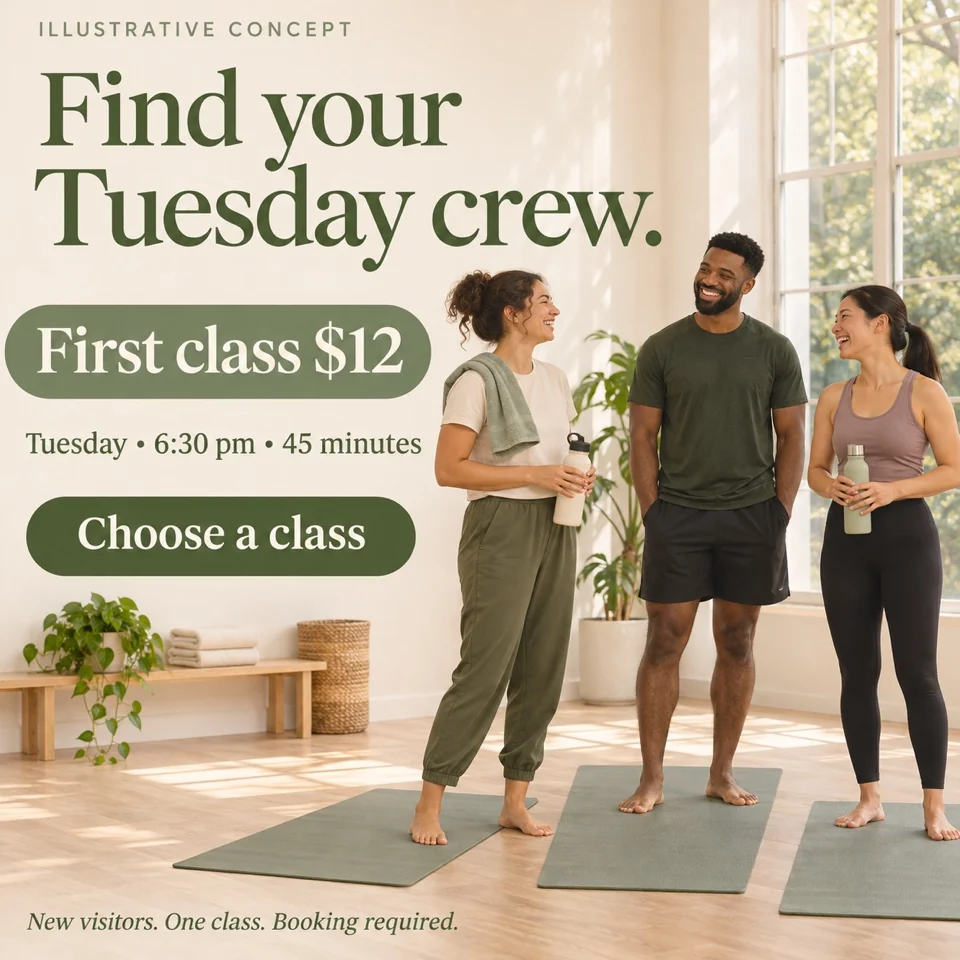
Headline: Find your Tuesday crew.
Primary text: Try a 45-minute studio class this Tuesday at 6:30 p.m. First class $12 for new visitors. Reserve one place, meet the instructor and see how the class runs. Booking required.
CTA: Choose a class
Visual direction: A welcoming studio with a small group and space between mats. Keep the actual schedule beside the price.
Why this approach is worth trying: A named day and time let someone make a practical decision. A general “join our community” message leaves that work to the visitor.
Booking-page match: Open the relevant class calendar. Show the class type, address, instructor, equipment requirements and cancellation terms before payment.
4. Lunch-break fitness ad: a 30-minute class
Audience and goal: People whose main obstacle is fitting a visit into the day.
Example offer: A 30-minute weekday express class for $10 on a first visit.
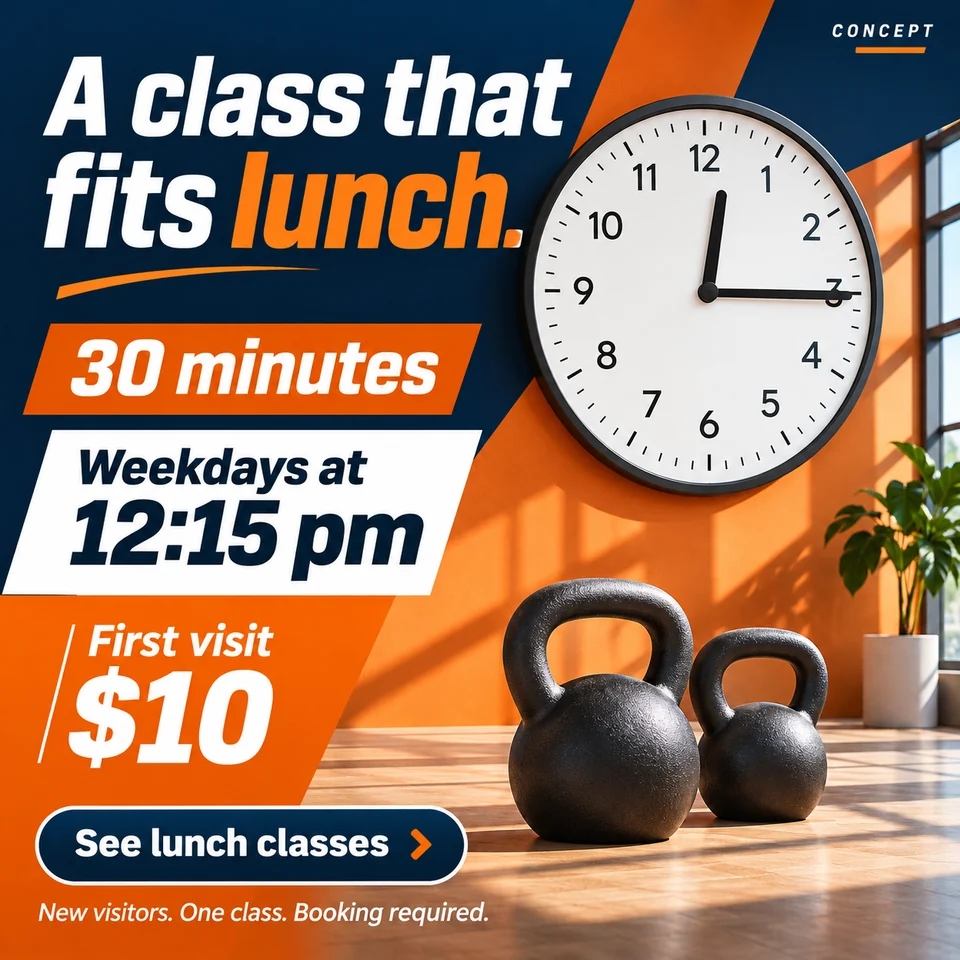
Headline: A class that fits lunch.
Primary text: Try a 30-minute express class at 12:15 p.m. on weekdays. First visit $10. Book ahead and see the timetable for available dates. New visitors; one class.
CTA: See lunch classes
Visual direction: An orange-and-navy schedule-led design, with a clock and kettlebells connecting the time slot to the activity.
Why this approach is worth trying: Time can be the offer. It is useful only when the advertised session genuinely starts and finishes as described.
Booking-page match: Show check-in time as well as class time. Include changing facilities and travel directions so the 30-minute claim is not mistaken for the whole door-to-door visit.
5. Gym tour ad: look around before joining
Audience and goal: People comparing nearby gyms and facilities.
Example offer: A free 15-minute tour by appointment; no workout included.
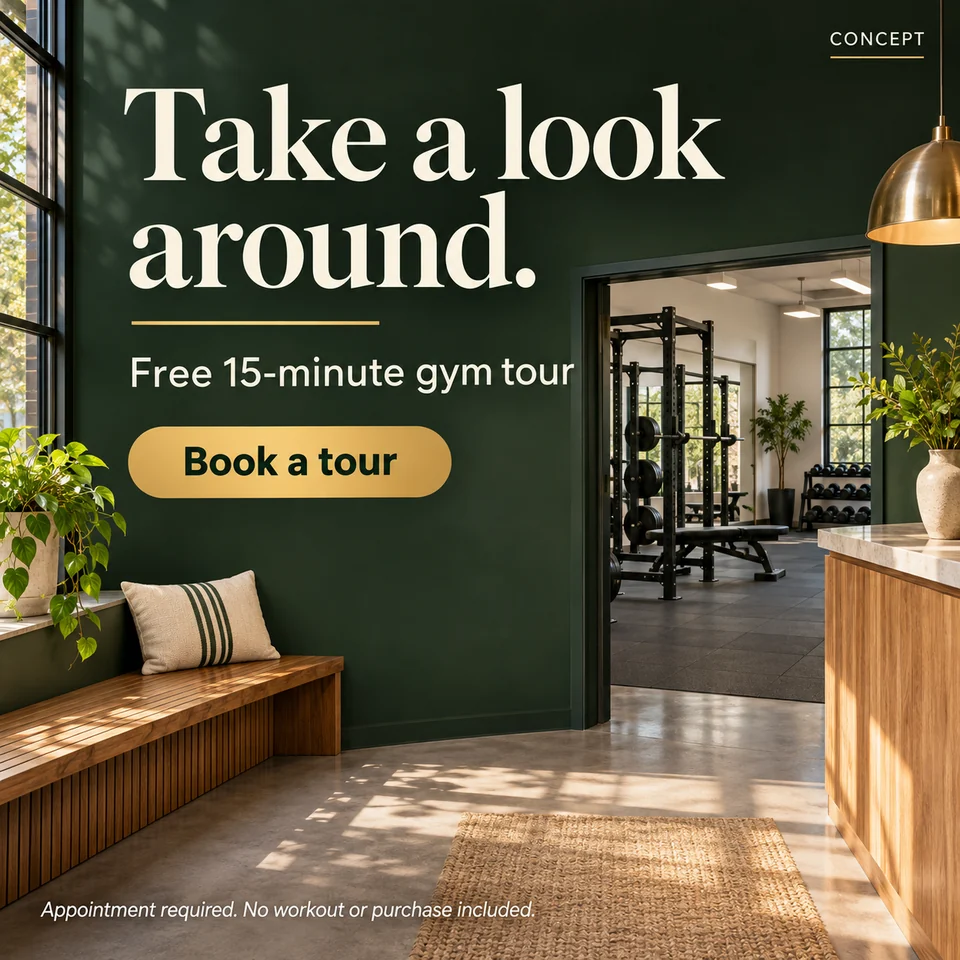
Headline: Take a look around.
Primary text: Explore the training floor, check the class spaces and ask about membership options on a free 15-minute tour. Appointment required. No workout or purchase included.
CTA: Book a tour
Visual direction: A doorway connects the welcoming reception area to the training floor. Use current photos of your actual space when adapting the concept.
Why this approach is worth trying: A tour can answer questions about equipment, accessibility and atmosphere before someone agrees to a membership.
Booking-page match: Offer real tour slots, directions, access information and a named check-in point. Keep prices accessible rather than hiding them until the tour.
6. Bring a friend gym promotion: one price for two
Audience and goal: Friends who want to try a class together.
Example offer: A $20 first-visit pass for two people attending the same class.
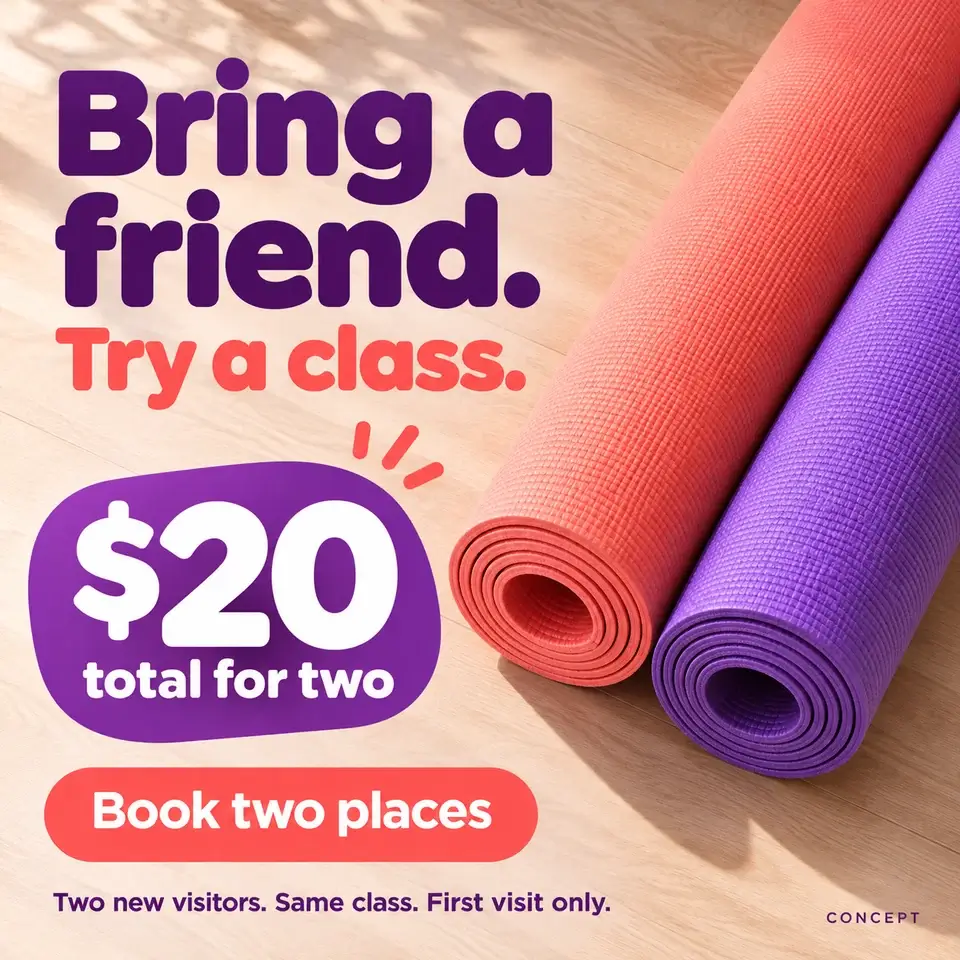
Headline: Bring a friend. Try a class.
Primary text: Two new visitors, one class, $20 total. Choose a session together and book both places in one reservation. First visit only; both guests attend the same class.
CTA: Book two places
Visual direction: Two mats or two pairs of training shoes; the “for two” condition should be as visible as the price.
Why this approach is worth trying: One total price removes the ambiguity of “bring a friend free.” It also makes capacity planning easier when the form reserves both places.
Booking-page match: Collect the details needed for two participants. Explain what happens if one person cancels, and avoid claiming two places are reserved until booking is complete.
7. Gym win-back ad: a seven-day return pass
Audience and goal: Former members reached through a permitted customer channel or an eligible advertising audience.
Example offer: A one-time $19 return pass for seven consecutive days.
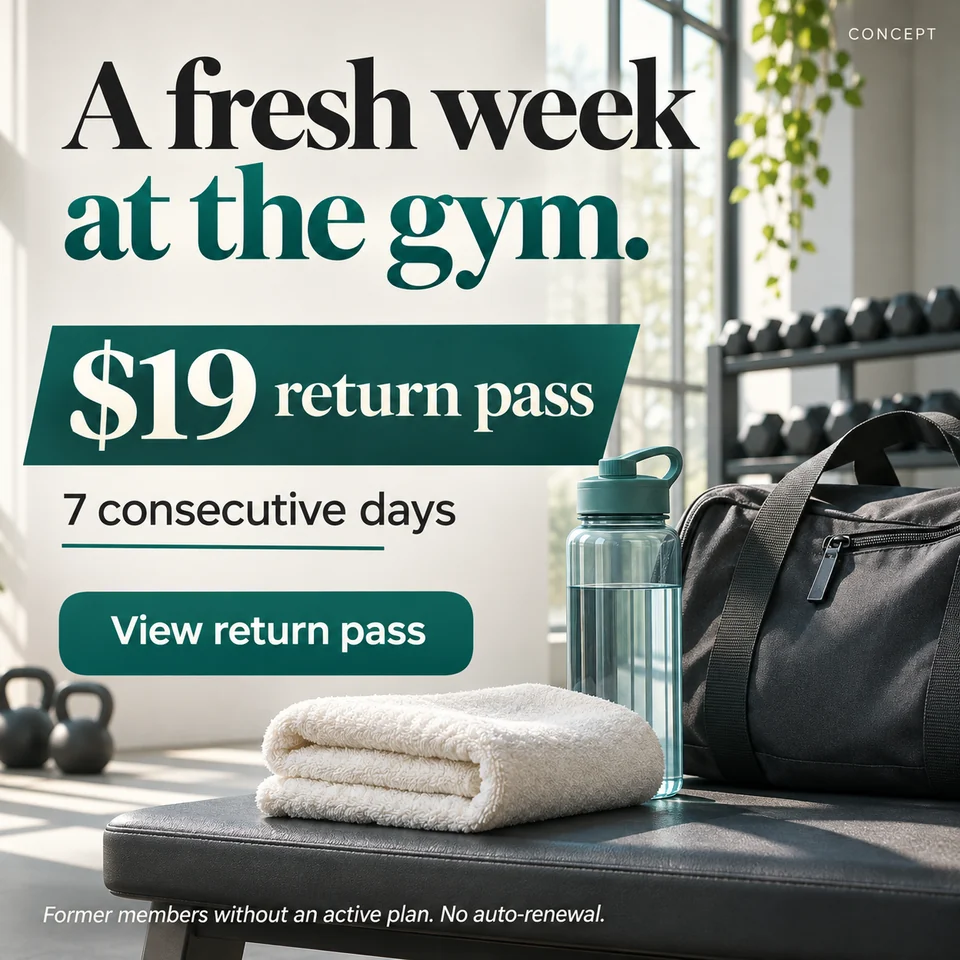
Headline: A fresh week at the gym.
Primary text: A one-time seven-day return pass is available for $19 for former members without an active plan. Explore the current timetable before choosing a new membership. No auto-renewal.
CTA: View return pass
Visual direction: Show an updated feature or current class space, without pretending a generated scene is the renovated gym.
Why this approach is worth trying: The offer explains eligibility and the length of access. It does not shame someone for stopping or imply knowledge of their health.
Booking-page match: Explain when the seven days begin, which services are included and how eligibility is checked. Do not make the offer visible to everyone if only former members qualify.
8. Off-peak gym membership ad: clear access hours
Audience and goal: Visitors with flexible weekday schedules.
Example offer: A $39 monthly off-peak plan covering weekdays, 9 a.m.–4 p.m.
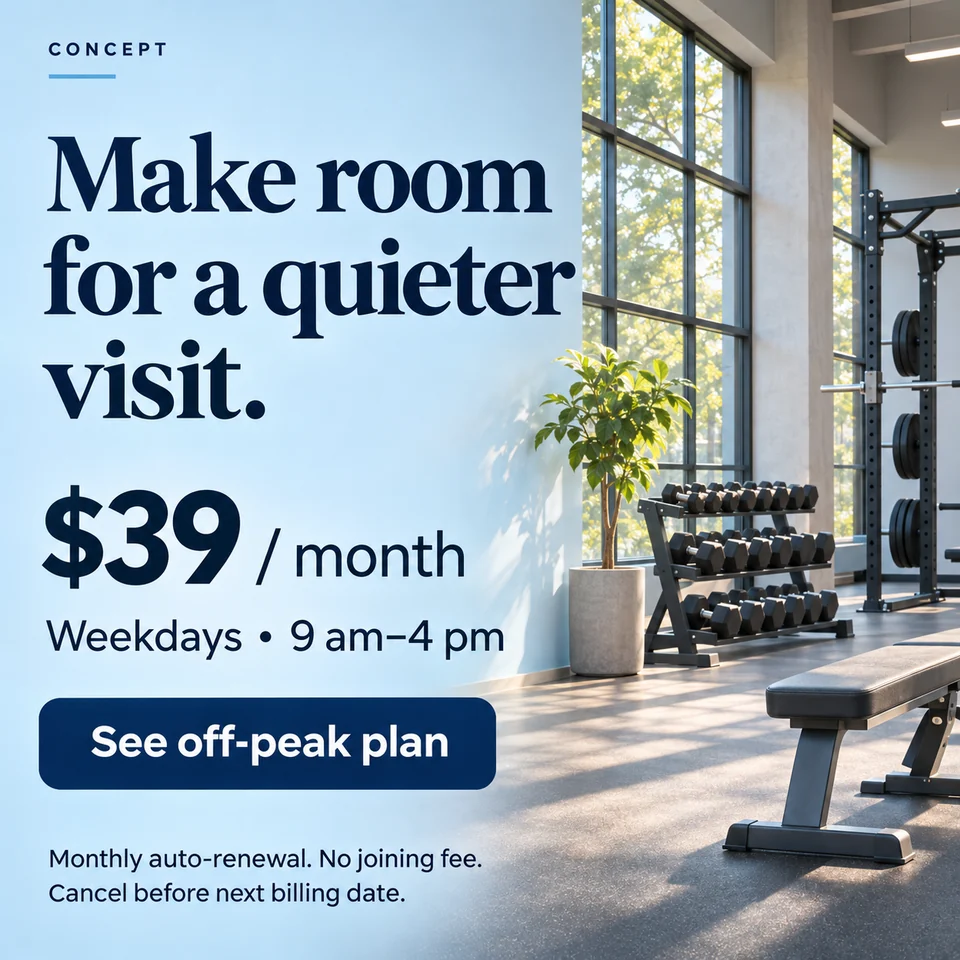
Headline: Make room for a quieter visit.
Primary text: Explore weekday gym access from 9 a.m. to 4 p.m. for $39 a month. Monthly auto-renewal; no joining fee. Cancel before your next billing date. Check the plan for included areas and closure dates.
CTA: See off-peak plan
Visual direction: An authentic daytime view of the gym, with the access hours prominently displayed.
Why this approach is worth trying: The schedule distinguishes the plan. Do not promise an empty gym or uninterrupted equipment access unless you can deliver it.
Booking-page match: Keep restricted hours and recurring billing beside the price. Explain any holiday exceptions, cancellation steps and services excluded from the plan.
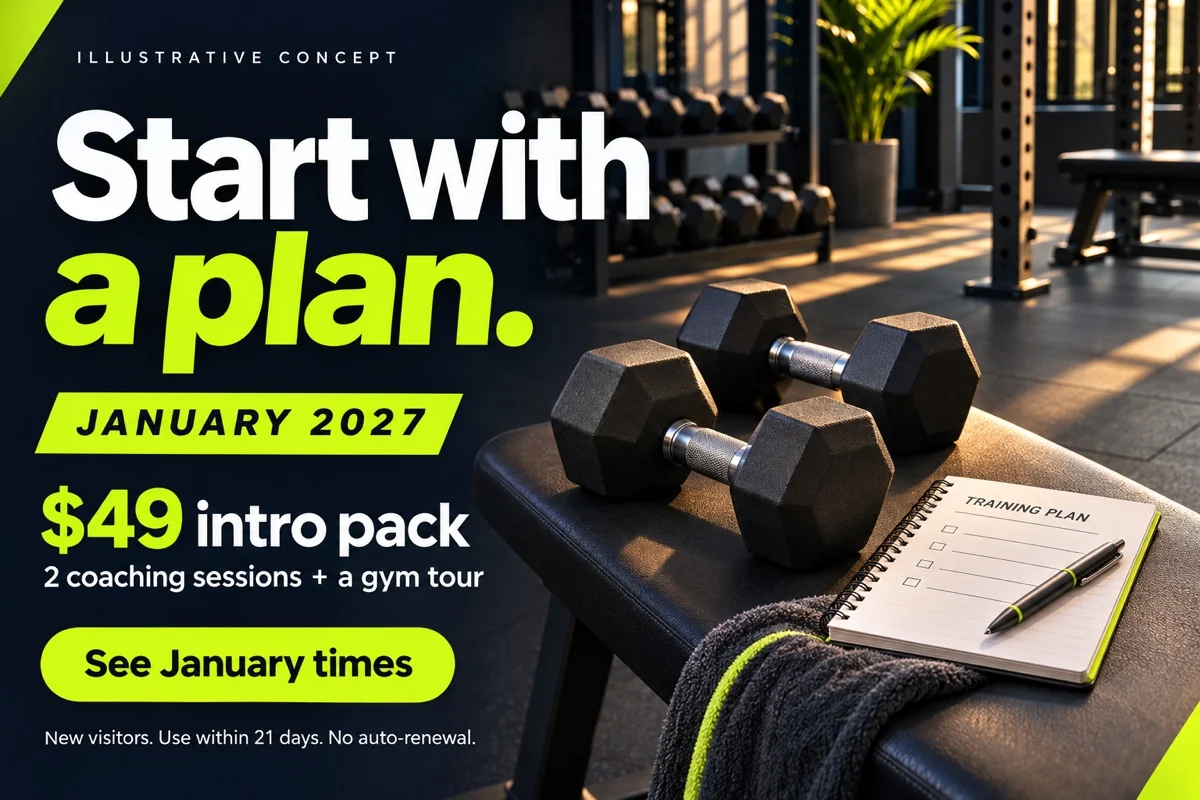
9. New Year gym ad: a January 2027 intro pack
Audience and goal: New visitors who want to explore coaching in January.
Example offer: A $49 intro pack: two coaching sessions and a gym tour, used within 21 days.
Headline: Start with a plan.
Primary text: Start January with two coaching sessions and a gym tour for $49. New visitors only; use the pack within 21 days of purchase. One-time payment. No auto-renewal. Choose an available January 2027 start time.
CTA: See January times
Visual direction: A training notebook and dumbbells with January 2027 in the copy, rather than a body-transformation photograph.
Why this approach is worth trying: A defined pack explains what someone buys. The New Year gives the campaign context without promising a different body by a deadline.
Booking-page match: Show the actual January slots, session duration and pack terms. If booking opens earlier, label it as advance booking and show the first available date.
10. Gym open house ad: a Saturday preview
Audience and goal: Neighbors who want to see the gym before choosing a plan.
Example offer: A free Saturday open day with a tour and a 20-minute class taster.
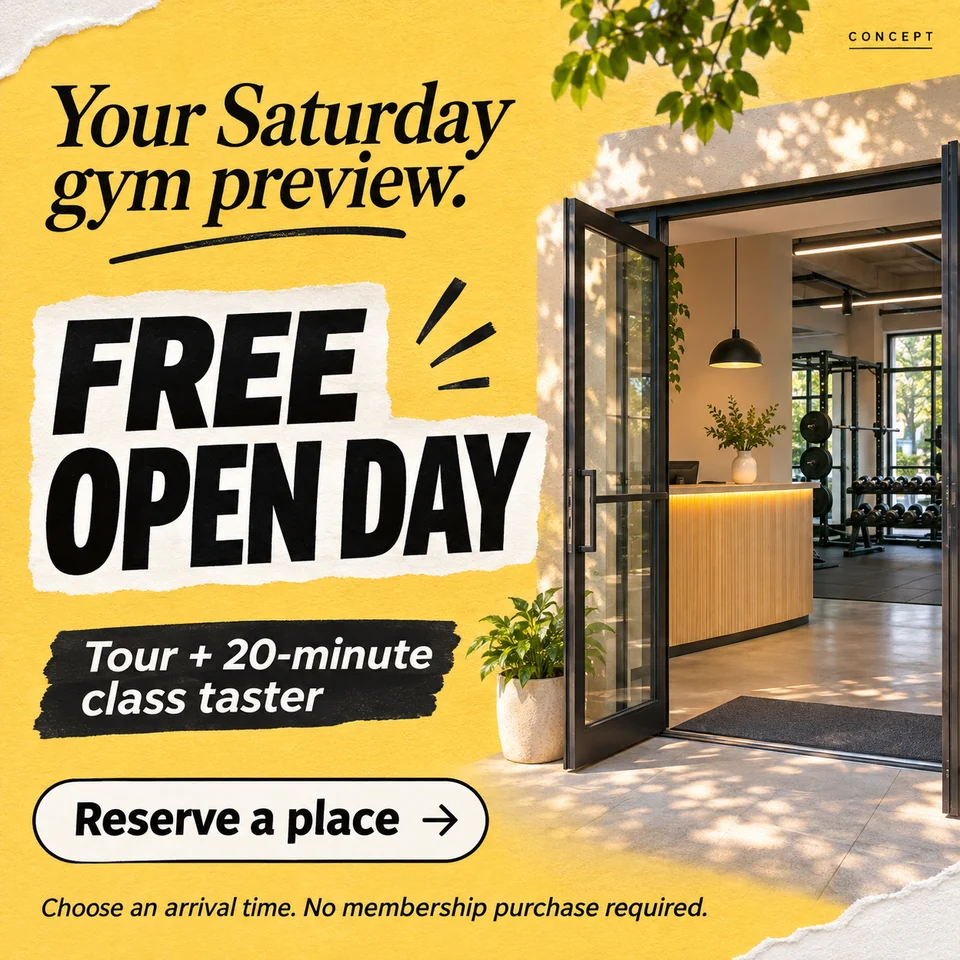
Headline: Your Saturday gym preview.
Primary text: Join our free Saturday open day: take a tour and try a 20-minute class taster. Reserve a place and select an available arrival time. No membership purchase required.
CTA: Reserve a place
Visual direction: A yellow event-poster layout pairs the open-day offer with an inviting gym entrance. Add your actual venue, date and address to the campaign.
Why this approach is worth trying: An event gives the invitation a concrete format. A time slot is more useful than invented scarcity such as “last chance” with no real deadline.
Booking-page match: Replace Saturday with the exact date, start time and address. Explain what to bring, any participation requirements and whether accompanying visitors need their own reservation.
New Year gym promotion ideas for January 2027
“New year, new you” leaves the actual product unclear. Build a January campaign around a visit someone can book: an introduction, a small class or a conversation with a trainer. The $49 intro-pack concept shows one way to do that without discounting an entire annual membership.
- Before the first start date: explain what the pack includes and show the first available January slots. If it is a waitlist, call it a waitlist rather than a confirmed booking.
- During the first week: show how to arrive, where to check in and what a first session involves. Use real staff and facility photos once the campaign is for an actual gym.
- As sessions fill: update availability or pause the ad. A coach’s full calendar is a reason to change the campaign, not to keep collecting bookings you cannot honor.
- After the introduction: explain the next membership or coaching option separately. Do not quietly roll a one-time pack into a subscription.
Keep a reusable offer without a year for campaigns outside January. For seasonal planning, see the 2027 US marketing calendar; for more seasonal image directions, use the January fitness image prompt.
Use the four-week January campaign plan to schedule the launch, answer first-visit questions and follow up with attendees.
Gym Facebook ads, Instagram ads and Display: adapt one campaign
Keep the same promise and rebuild the layout for the space. A square banner squeezed into a narrow rectangle makes the schedule and terms too small to read. Here is a practical adaptation brief for the three-session intro offer.
| Canvas | Keep in the creative | Layout decision |
|---|---|---|
| Square feed · 1080 × 1080 | “Your first lift starts here.” / “$29 · 3 coached sessions” / “Book an intro” | Use the equipment on one side and a short text block on the other. Keep introductory-pass restrictions readable. |
| Vertical Story · 1080 × 1920 | The same headline, price and three-session offer | Stack the headline, equipment and CTA. Keep key details away from interface overlays and preview the actual placement. |
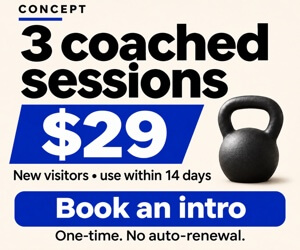
| Uploaded Display · 300 × 250 | “3 coached sessions · $29” / “Book an intro” | Use one piece of equipment and two short text lines. Do not shrink the entire square design. Put the full matching offer on the destination. |
The square and vertical dimensions above are working design canvases, not a promise of eligibility for every Meta placement. Check the current placement preview and our Meta ad sizes guide. Google lists 300 × 250 among its supported uploaded display sizes; follow the current uploaded display ad specifications for the campaign and file type you use. The article’s JPEG illustrations are editorial previews. The 300 × 250 example has the stated dimensions, but still needs your real gym identity, approved terms and campaign review before use.
For a finished campaign, include the real gym name and enough location information to distinguish it. The illustrations here deliberately show no real gym brand. On small canvases, use the headline for the offer and let the real ad text and destination carry additional detail without hiding material restrictions.
A reusable creative brief
Use a brief like this to keep the offer consistent while making new visual directions. Treat prices and conditions as approved copy, rather than asking the image tool to invent them.
Campaign: three coached intro sessions for new visitors.
Offer: $29 total; use within 14 days; one-time payment; no auto-renewal.
Headline: Your first lift starts here.
CTA: Book an intro.
Visual: welcoming strength studio, orderly equipment, daylight.
Style: warm ivory, cobalt accents, strong readable typography.
Destination: the intro-pack page with price, location and actual times.
Exports: square feed, vertical Story and 300 × 250 Display.
Review: exact wording, real facility, crop, legibility and booking terms.
In AdflowKit’s banner builder, start with your approved campaign brief and review the generated creative before exporting it. Keep your real logo, offer and visual identity consistent; our AI banner prompt guide explains how to turn these details into a clearer request.
Make the booking page finish the ad’s sentence
If the ad says “First class $12,” the visitor should see that class and price immediately after clicking. An unrelated membership page creates questions the ad had already appeared to answer.
- Same offer: name the exact pass, total price, included sessions and eligibility.
- Same next step: show class times for a class ad, tour slots for a tour ad and two participants for a buddy pass.
- Practical details: give the address or neighborhood, arrival instructions, session length and what to bring.
- Payment terms: explain taxes or required charges, renewal, expiry, cancellation and refund conditions before checkout.
- Real capacity: connect the offer to available staff and places. Remove a time from the ad when it is no longer offered.
- Confirmation: state whether the form reserves a place, requests a callback or adds someone to a waitlist.
Keep “free” for offers that are actually free under the stated conditions. Google’s misrepresentation policy covers misleading prices, unavailable offers and unrealistic claims. Review the finished campaign and destination together; this guide does not guarantee ad approval.
Write an invitation people can assess
For Facebook and Instagram campaigns, review Meta’s current Privacy Violations and Personal Attributes and Health and Wellness standards alongside the finished creative. Keep the invitation focused on the class, coaching and offer; check any health, appearance or transformation messaging against the current rules for the campaign.
Describe the service and the visit. Avoid copy that pressures people about their appearance, guesses at their health or promises a particular physical result. This is also a clearer way to explain a gym’s offer.
| Avoid | Try instead |
|---|---|
| “Hate your body? Fix it in January.” | “Start January with two coached sessions and a gym tour.” |
| “Guaranteed transformation in 14 days.” | “Three introductory sessions to meet the coach and explore the equipment.” |
| “Only two places left!” without live availability | “Choose an available class time.” |
For a local campaign, use accurate, permission-cleared photos of your venue and team. Attribute any real customer testimonial accurately and get permission to use it.
Test for attended introductions, not just cheap clicks
Begin with one offer and two visual treatments. For example, compare an equipment-led image with a real trainer portrait while keeping the $29 intro pack, audience, destination and campaign settings the same. Then test another headline only if the first comparison gives you useful information. The ad creative A/B testing guide covers how to avoid changing too many variables at once.
Keep the denominators clear. Cost per booking is ad spend divided by completed bookings; cost per attended visit is ad spend divided by people who actually attend. Use a consistent campaign cohort and enough time for those appointments to happen. If a metric has no completed events, do not divide by zero or present it as a success.
| Measure | Example A | Example B |
|---|---|---|
| Ad spend | $300 | $300 |
| Completed bookings | 20 | 15 |
| Attended visits | 8 | 12 |
| Cost per booking | $15 | $20 |
| Cost per attended visit | $37.50 | $25 |
Here, A has the cheaper booking and B has the cheaper attended visit. Compare membership purchases, delivery costs and retention before increasing spend; these small samples are only enough to illustrate the calculation. Track duplicate bookings, cancellations and no-shows separately so the same person is not counted several times.
When an offer still works but a visual has been seen repeatedly, use our creative fatigue guide to decide what to refresh. For other compact service layouts, compare the Google Display service-booking example.
Do not use a universal gym cost-per-lead benchmark as your target without checking the source and market. Work backward from your own capacity and economics. A low-cost lead is not useful if the offered class is full or the visitor cannot attend.
Gym advertising FAQ
What should a gym ad say?
Name one offer, who it is for, what is included and the next action. “Three coached intro sessions for $29. New visitors. Book an intro” gives more information than a general “Join today.” Add the real location, expiry and payment terms where needed.
What are good gym membership promotion ideas?
Consider a coached introduction, a first-class pass, a two-person visit or a clearly priced off-peak membership. Choose an offer your staff and timetable can deliver, and explain whether it is a one-time purchase or a recurring plan.
How can I advertise a gym without a discount?
Offer information or access: a tour, an introduction to a trainer, a class preview or an accurate walkthrough of the facility. Explain what happens on the visit and let people choose a real time. A useful first step does not have to reduce the price of an annual plan.
What should a New Year gym ad promote?
A specific January starting point, such as two coaching sessions and a tour, with available dates and a clear total price. Keep the year in editable copy and update or remove seasonal messages after the campaign ends.
How should gym Facebook ads differ from gym Instagram ads?
Keep the same offer and booking destination, then adapt the composition to the selected placement. A feed ad can pair a square image with explanatory primary text. A Story needs a vertical layout with the headline and price readable inside the placement preview. Check the actual crop and interface overlays before publishing.
What gym social media post ideas can support a paid campaign?
Show a real first-visit walkthrough, introduce an instructor, explain one class format and post the upcoming timetable. Keep the price and booking instructions consistent with the ad. A sequence might introduce the coach, show the studio and then invite people to choose a session.
Can I adapt these fitness ads into a gym flyer?
Yes: keep one offer, then add the real gym name, address, exact event date where relevant and a short booking URL or QR code. For print, prepare the file to your printer’s trim, bleed and resolution requirements. Scan the QR code from a physical proof and confirm that it opens the correct booking page.
Sources and how these examples were made
AdflowKit created the example offers, copy and visual concepts for this guide. Ten original ad concepts and two layout adaptations were generated with an AI image tool and reviewed for visible text, composition and consistency with the described offers. The people, studios, offers and schedules are illustrative; the concepts have not been run as paid campaigns.
Illustrations published by AdflowKit. Publication does not grant permission to reuse these images. For permission requests, contact hello@adflowkit.com. The image record includes the generation prompts and final dimensions.
- Google Ads: misrepresentation — offer, pricing and claims review.
- Google Ads: uploaded display ad specifications — check accepted sizes and files for your campaign.